
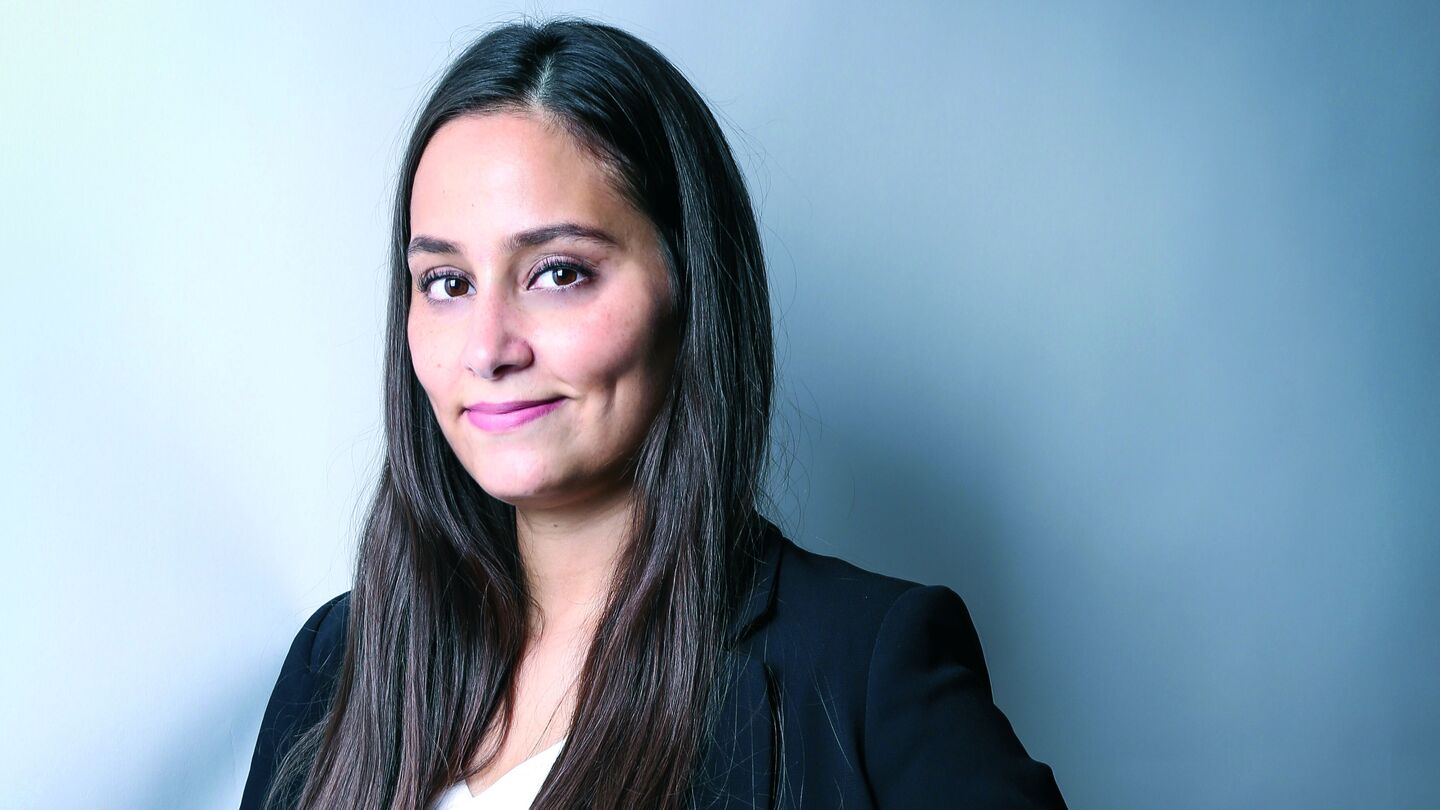
Sibel Baladin
Having trained as an office administrator and completed a dual degree in administrative IT, she is now working on rolling out the ‘digital file’ for the Berlin administration.
- Degree programme
Verwaltungsinformatik, Fachbereich 3
- Degree
Bachelor of Arts (B.A.)
- Graduating year
2019
- Position / Current employer
City Inspector in the IT department of the Education Authority at the Tempelhof-Schöneberg District Office in Berlin
Did you gain any work experience or complete an apprenticeship before starting your degree?
Yes. After leaving school, I did an apprenticeship as an office administrator and, at the same time, obtained my university entrance qualification.
I then initially studied business mathematics, but quickly realised that the subject was too theoretical for me.
In the Administrative Informatics programme at HWR Berlin, I particularly liked the practical focus and the varied modules – that suited me better.
Which memories stand out in particular?
I particularly remember Prof. Dr Dagmar Lück-Schneider. The combination of professional expertise and necessary, constructive rigour prepared us perfectly for future working life – many thanks to her.
Which experience during your studies had a lasting impact on you?
There was one module that I didn’t pass at the first attempt. That was quite depressing. It showed me that I could only get through my studies with good preparation and hard work. Through this, I learnt where my strengths and weaknesses lie and which professional direction I wanted to take
Were there mentors, coincidences or key experiences that influenced your path?
An important milestone was my compulsory internship at ITDZ Berlin, where I was able to gain formative experiences and make valuable contacts. My bachelor’s thesis (“Team-oriented Resource Management at ITDZ Berlin”) was also written in collaboration with ITDZ. I then moved to msg systems ag, which was working for ITDZ at the time, and was able to gain further insights into IT consulting there, which have had a decisive influence on my career path.
What does a typical working day look like?
First things first: a coffee to start with.
I am currently working with a colleague, who is also a former fellow student, on the introduction of the Digital File (a project of the State of Berlin to be implemented by 1 January 2025, EGovG Bln §7, para. 1). The Digital File replaces the paper file as far as possible, whilst also serving as a system for the electronic processing of procedures.
Regular Jour Fixe meetings take place, and I’m in constant contact with colleagues – including those from other Berlin district offices. Particularly within the scope of the “Digital File” project, there’s a lot of coordination and collaboration across different departments.
I also handle enquiries from colleagues and carry out organisational tasks.
What do you particularly like about your current role?
In my work, I can apply the knowledge from my studies directly – particularly at the interface between administration and information technology.
I appreciate the open communication within the team and the positive interaction with colleagues and departmental management.
I’m also enthusiastic about the ‘Digital File’ project, which my colleague and I have built up together.
What are the key skills you need in your day-to-day work?
Interpersonal skills at a professional level, essential IT knowledge, as well as computer skills with programmes such as Microsoft Word, Excel, etc.
How well did your degree prepare you for your current role?
My degree at HWR Berlin prepared me very well for my current role from a technical perspective – particularly through the practical content and the focus on public administration.
Furthermore, I learnt to work with a wide variety of personalities. This experience helps me particularly today when interacting with colleagues and different departments.
What advice would you like to give students, even beyond their studies?
Stay organised and expect that there will be ups and downs both during your studies and in your professional life – that’s perfectly normal.
Also, make sure you regularly set aside time for self-reflection: if you know your own strengths and abilities, you can make more informed decisions and develop in a more targeted way.
For me, HWR Berlin represents one of the most important periods of my life; it shaped me as a person, opened many doors for me and provided me with the ideal start to my career.